Stage 2, Finding the Gaps
Find out why our area is the way it is
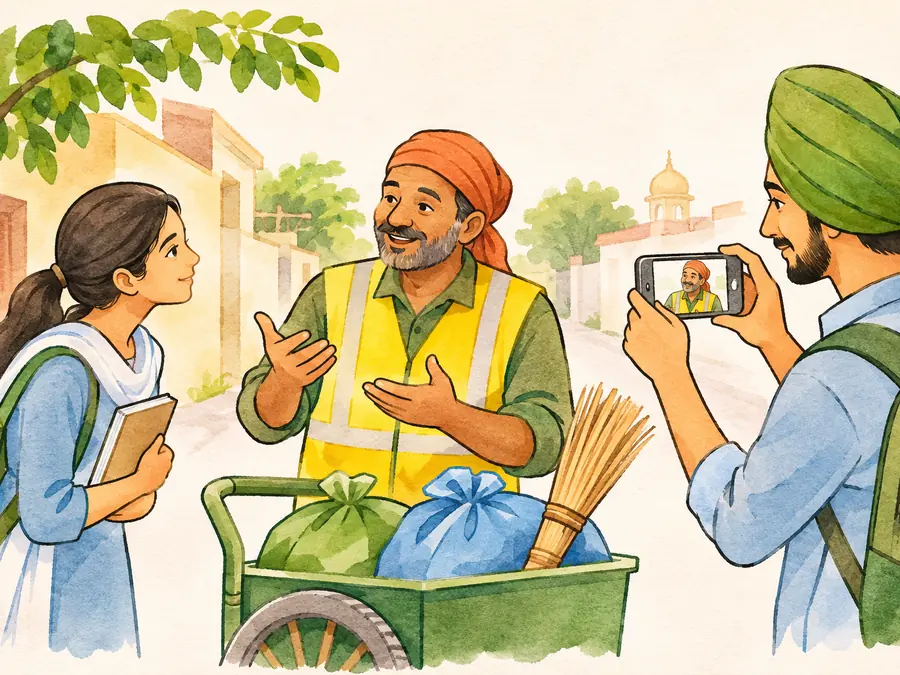
- Our team divides the work: some of us talk with residents and shopkeepers, others with the area's waste collection staff.
- We revisit the garbage spots, and record how they look now.
- Together, we write the gap summary: each gap between what should happen and what does, with its evidence.
- We agree on the two or three gaps our team will act on in Stage 3, and add the gap summary's link on the portal.
See moreSee less
Listening well
Be polite, listen first, and thank people for what they already do. Record an interview only with the person's consent.
When someone says it is not their job
Agree first that the municipality has a role, then ask what one small thing would help this street. Arguments rarely change habits; a small, clear request is easy to accept.
Gaps often found
- Collection times that do not suit residents.
- Too few staff, or missing equipment.
- Old habits, such as dumping in one place.
What to share
Longer videos of the conversations and interviews, showing respectful dialogue, shared responsibility and the practical solutions discussed, and pictures of the garbage spots as they are now.
What good work looks like
- Residents, shopkeepers and collection staff have all been heard.
- Each gap in the summary is supported by evidence.
- The chosen gaps are ones our team can realistically act on.
- The videos treat every person fairly.
Check yourself
A shopkeeper is not sure about joining in. What helps most?
Right!Politeness, listening and thanks change habits; arguments rarely do.
Not quite.Try another answer.